River water knots
In collaboration with:
Candelaria Franco, mother, teacher, weaver, fisherwoman, and Colombian gatherer.
Daniela García, night creator, passionate about natural dyes.
Lourdes Cruz, biologist who maps the neighborhood through its trees and people.
Rossi Terán, Venezuelan-Mexican who thrives on encounters with neighbors.
Ari Monroy, educator and weaver, with a passion that transcends schedule or distance.
Jessica Martínez, young and cheerful mom who expands her network of friends in the neighborhood.
Rosa Isela Pérez, Alexa's grandmother, fierce and a weaver of great experience.
Alexa Isabel Martínez, enthusiastic, creative, generous, gentle, and dedicated young woman.
Julia Duarte, brave woman who knows how to reclaim time without rush or pause.
Eugenia Suárez, active athlete and swimmer who enjoys neighborhood coexistence.
Zurimi Mendoza, administrator by profession, manual creator, and dedicated to her family.
Florencia Mejía, wise and subtle companion who seeks to coexist and learn in the process.
Curatorship: Josefa Ortega
Community engagement: Paloma Rivera
Production: Mariano Arribas, Jacqueline Bernal Espiritu, Víctor Hugo Valdez Cruz
Production assistance: Mónica Macías Álvarez del Castillo, Aurora Escobar García, Mariana Tola Reyes and Mariana Mejía Peña
Texts: Adriana Salazar, Paloma Rivera and Josefa Ortega
Dyeing: Daniela García Aguilar and Lourdes Cruz Terán
Design: Gabriela Cruz and Mariana Mejía
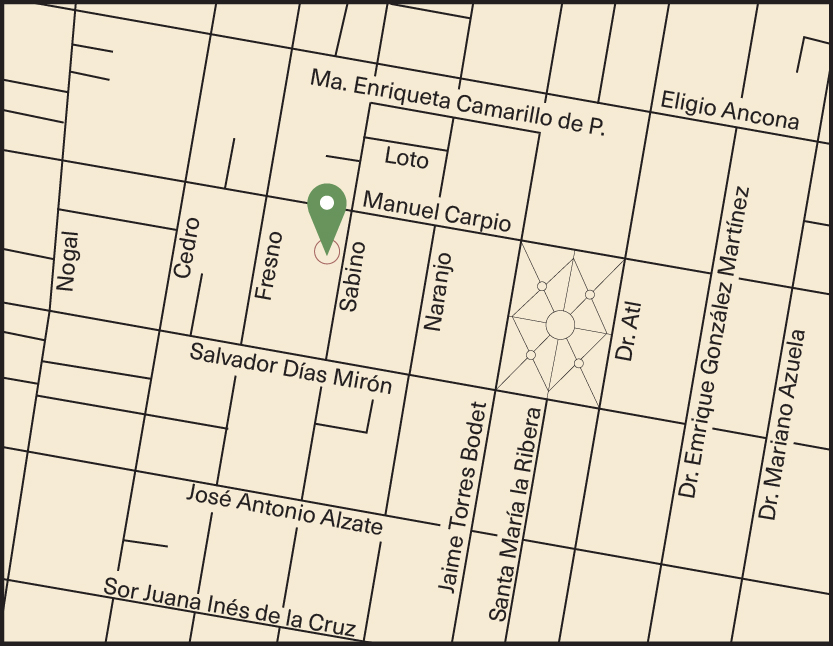
Exhibition by artist Adriana Salazar Vélez that explores the relationships between water, memory, and territory through the traditional cast net weaving. The exhibition presents a large net collectively built during a creation process developed in Santa María la Ribera, along with materials that documented the stories, knowledge, and conversations that emerged during the encounters. The process also incorporated dyeing the net with eucalyptus, linking knowledge about plants, water, and territory. Based on this experience, the exhibition proposes weaving as a practice of listening, knowledge transmission, and collective memory building, and invited reflection on water as a common good that connects territories, people, and forms of care.