La cocina es entendida como un espacio de encuentro, cuidado y transmisión de saberes. En esta línea desarrollamos talleres y actividades que vinculan alimentación, bienestar y prácticas tradicionales, integrando conocimientos contemporáneos y experiencias locales.
Exploramos la relación entre nutrición, salud comunitaria y cultura alimentaria, promoviendo hábitos conscientes y el intercambio intergeneracional en torno a recetas, ingredientes y formas de preparación.

Kitchen Lab: explore, taste, and cook again
This culinary learning and experimentation platform aimed to develop creative thinking skills applied to ingredient management in the family kitchen environment. Beyond fostering gastronomic innovation per se, the program's design capitalized on creative impulse as a tool for improvisation and efficient resolution of the daily home menu.
Through this approach, participants consolidated the technical and conceptual foundations of four essential pillars in the diet of urban Mexican families: salads, stocks and soups, sauces, and stews.
Building on these foundations, the group put their sensibility and taste into practice to experiment, diversify, and improvise recipes. This collective creation process was energized and documented horizontally through a WhatsApp group, which remains active and self-managed as a living community resource for this network of neighbors.
Common Miscellany: Granja La Bolchevitta
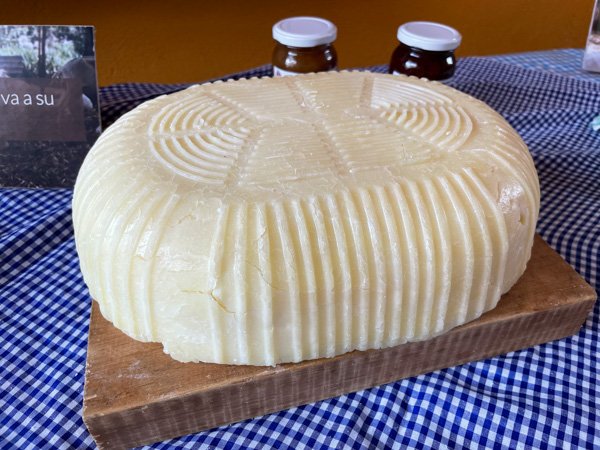
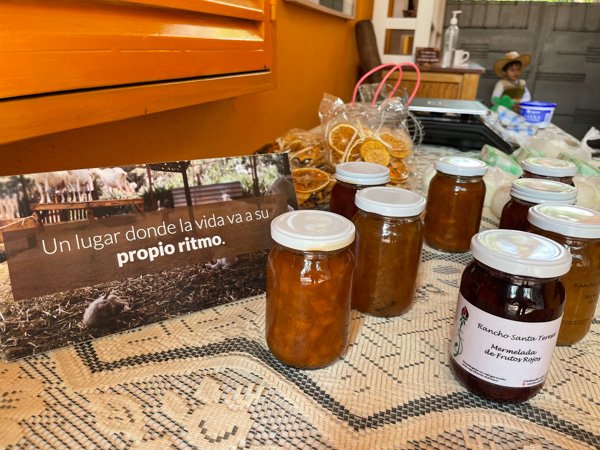
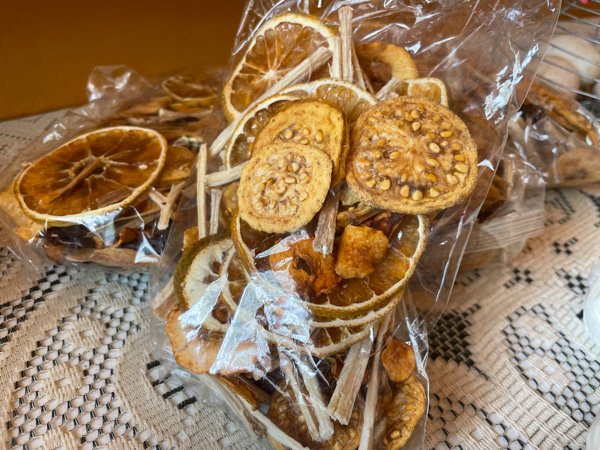
In August, we welcomed the farm La Bolchevitta, a family project led by Cipactli Suárez, located in the town of Santa Rosa Xochiac, Cuajimalpa. They brought various types of artisan goat cheese, turkey eggs, fruits, and jams from their farm.
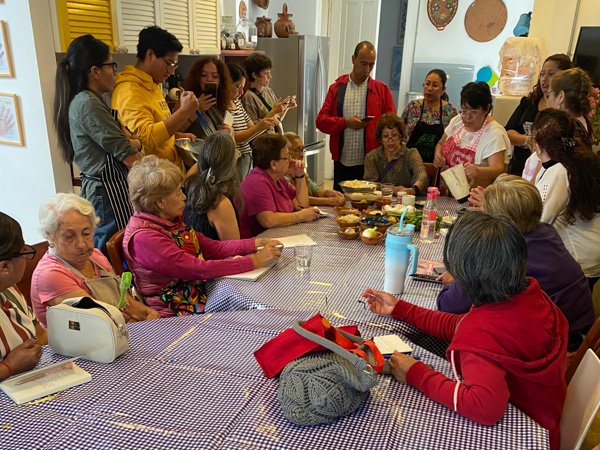
Milpa Food 2: Dry Season
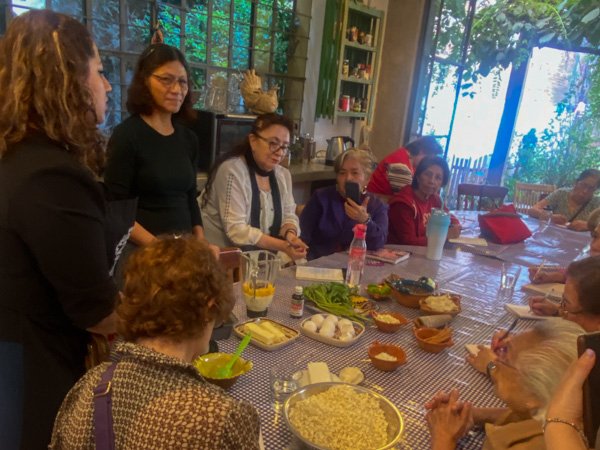
In this second edition of the Milpa Food workshop program, the neighbors explored dry and cold season recipes, cooking tejocote atole, corn bread, and beans with masa. In addition to preparing this menu, the conversation focused on utilizing what the milpa provides during its period of maize harvest cessation.
Food From the Maize Field 2 - Dry Season
In this second edition of the program of workshops on Food From the Maize Field, neighbors researched seasonal recipes for dry and cold periods, cooking atole with Mexican hawthorn fruit, corn bread and beans with corn dough. In addition to preparing this menu, conversation was directed at exploiting what the maize field provides during the time that corn cannot be harvested.
Flavors Shortening Distances
During this dinner gathering, the cooks Angelica Palma and Rosalba Rodriguez prepared a menu of dishes made with ingredients from the maize field to share with a group of neighbors and promoters of original languages from different territories who were participating in the encounter Voices and Living Territories - Encounter of Dynamizers, Teachers and Promoters of Mother Tongues. This encounter fostered interpersonal relations and sought to integrate a network that transcends work links and builds collaboration through affective dialogues between participants. On this occasion, in addition to the food, the guests shared stories and songs in their mother tongue.
Green Flavor - Workshop on Recipes Based on Nopal Cactus
The cook and farmer Flavia de Albino led two workshops in which she shared her culinary knowledge. The first focused on the preparation of nopal-based beverages, such as atole and crush, while the second focused on the preparation of preserves and jams. In these workshops, Flavia de Albino demonstrated various techniques to create textures and flavors that can easily be incorporated into the daily diet. Flavia de Albino has acquired a vast experience as a grower, harvester, producer and cook; the produce from her cactus, maize and pumpkin fields in Huamantla, in the state of Tlaxcala, are the basis for her preparations.
Food and Earth: Introductory Workshop on Urban Agroecology
In this cycle of workshops, the producer María Teresa Brambila shared with neighbors the basic concepts to become familiar with the world of urban agroecology. The sessions included revision of the necessary practices to create a good substratum from solid urban waste, addressing the importance of land as a non-renewable element. It also reviewed techniques for growing and caring for food taking the cycles of the moon and the climate into account, and finally, certain forms of food conservation, such as dehydration.
Workshop on Seed Cushions
These workshops taught how to make cushions that aid in the treatment of multiple ailments. The participants reviewed the criteria for choosing the cloth and seeds, as well as the inclusion of specific plants and essential oils for therapeutic use and care.
Stories and Flavors we Inhabit – The Road to a Neighbors’ Editorial Project
Following encounters between neighbors in 2023, we launched an open invitation to inhabitants to create a narrative body of work that would make a joint editorial project by Casa Gallina and Miguel Iwadare viable; the project’s purpose is to delve into their concerns about the eating culture in Santa Maria la Ribera, their experiences and personal knowledge about diet and its visible varied dimensions in our community. During this encounter the neighbors themselves established a road map to harmonize they’re and the Casa Gallina team’s necessary steps for texts and field work.