A Book Built Collectively: Childhoods, Territory, and Community in Here is a House
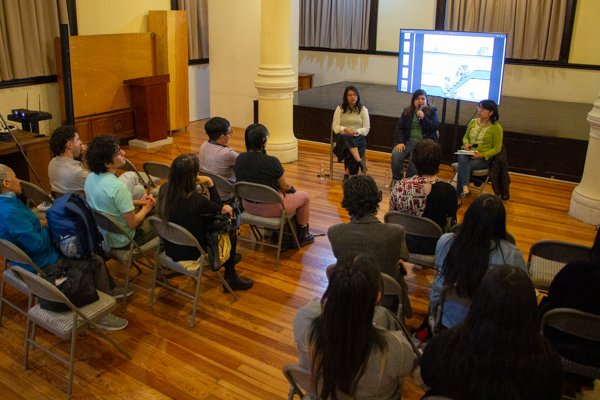
The museum, in this case, functions as an exhibition space for a project born in the territory and in the dialogue between children, artists, and cultural mediators.
More than a book, the project brings together multiple layers: an exhibition, educational processes, and an artisanal editorial object that condenses years of collective work. At the center of it all, a clear premise: to recognize children as protagonists in the construction of knowledge about their own territories.
A project born from the territory
The initiative was conceived from a series of processes promoted by Casa Gallina in dialogue with communities in Milpa Alta, an area of Mexico City that, despite its urban condition, maintains strong roots in the Nahua worldview and culture.
The most recent starting point was the exhibition Rains and Dry Spells, developed in 2024 with artist Melissa Paredes and Calpulli Tecalco, focused on the region's ecosystems. From there, an educational process was triggered that connected children from Milpa Alta with children from Santa María la Ribera.
Through a summer course, they explored these territories using images, games, and activities. The result was a postal exchange in which they shared how they live, what they eat, what their homes are like, and what landscapes they inhabit. That dialogue was the seed of the book.
Childhood as Author
One of the most powerful aspects of the project is the recognition of children as active agents, not passive recipients.
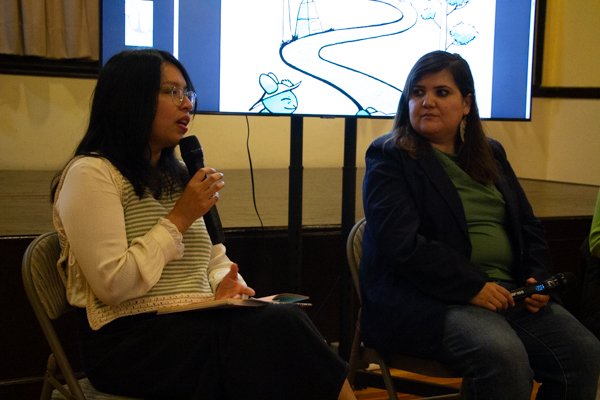
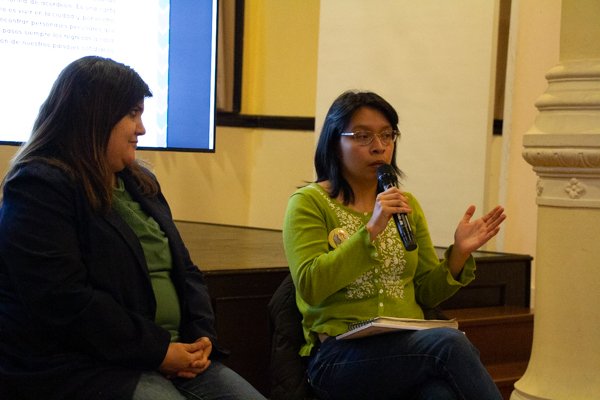
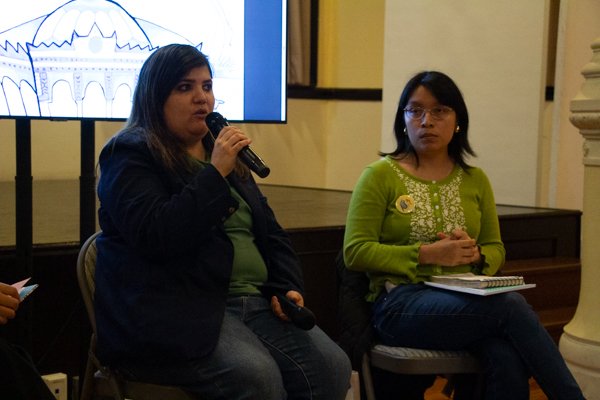
“Sometimes it's not us adults who teach, but the children who teach us,” noted writer Alejandra Retana during the presentation.
The experiences, drawings, and stories generated in the workshops not only inspired the book's content: they structured it. Everyday scenes, cultural symbols —such as the chinelos or local festivities— and ways of naming the world emerge directly from children's voices.
A Dialogue Between Text and Image
The book is the result of a close collaboration between Alejandra Retana's writing and Pepe Retana's illustration, in a process that both describe as deeply dialogical.
Far from a hierarchical relationship, text and image were built in parallel, reinterpreting each other. “We are both authors,” Alejandra affirmed, emphasizing that every decision was negotiated and shared.
Characters Born from the Observation of the Territory
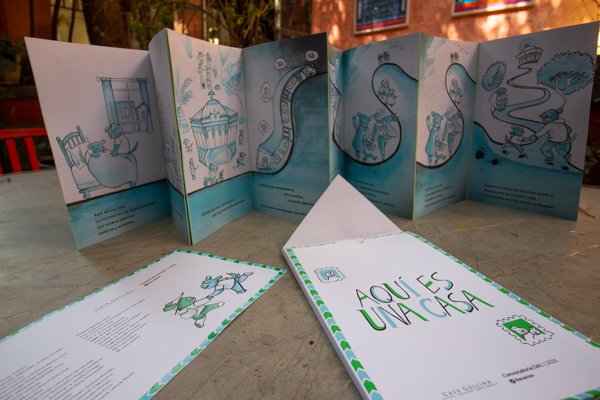
The illustrations stem directly from the materials produced by the children: notebooks, drawings, and stories in which landscapes, scenes, and everyday elements were repeated. From this observation, the illustrator built a visual universe that translates these territories into characters and situations.
In this process, the characters became animals —such as cacomixtle, chickens, teporingos, dogs, or axolotls— not as a decorative resource, but as a way to represent the life that inhabits each place. Rather than portraying specific individuals, the intention was to build figures that condensed collective experiences and allowed for exploring spaces from a sensitive perspective.
Thus, animals function as mediators between the landscapes and those who inhabit them: they allow for showing the vitality of daily life, community dynamics, and relationships with the natural environment. At the same time, they incorporate elements present in the children's own drawings, as well as in local ecosystems, integrating the observed, the lived, and the imagined into a single visual narrative.
A Book as a Living Object
The materiality of the book reinforces its concept. Designed as a postal envelope that unfolds like an accordion, the object directly refers to the exchange that gave it origin.
Each copy is produced artisanally, printed and assembled manually, which reinforces its unique and careful character. Furthermore, the format invites interaction: opening, unfolding, exploring.
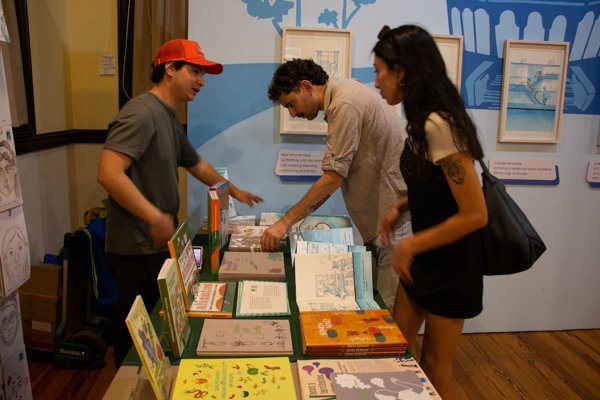
But the project does not end with reading. The associated exhibition —presented at the museum as its venue— allows visitors to explore the original illustrations, intervene in the space, and continue the dialogue initiated by the children.
Casa Gallina: Mediation and Community
Casa Gallina's role has been key as an articulator of the project. Under the direction of Josefa Ortega, the organization has promoted a working model that combines art, education, and community.
More than producing content, Casa Gallina builds processes: it convenes artists, links territories, listens to children, and generates platforms where different voices can meet.
Inhabiting and Reimagining the Territory
In an urban context where rootedness becomes increasingly fragile, Here is a House proposes a pause: to look at the surroundings, recognize them, and re-signify them.
The project suggests that both rural and urban areas are traversed by memories, affections, and community practices. And that, often, it is children who best manage to name them.
Far from being a static object, the book is presented as an open invitation: to imagine other territories, to tell new stories, and to continue building community through collaboration.
A new bilingual edition of the book in Nahuatl and Spanish is currently being worked on.
Thank you very much!
Your contribution to A Book Built Collectively: Childhoods, Territory, and Community in Here is a House will help us continue creating social change through community and cultural processes for the common good and the environment.
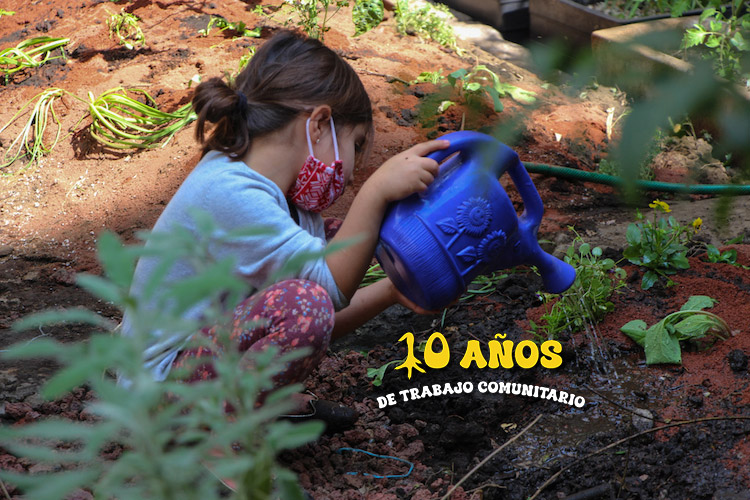
Casa Gallina: 10 years of community work
Thank you for supporting our community work. Your contribution helps us continue building spaces for social and cultural transformation.